Report harm or risk of harm
Anyone who witnesses, becomes aware of, or suspects that a resident has been harmed or may be at risk of harm should report it.
Family members, substitute decision-makers, healthcare professionals, retirement home staff and members of the public can all make a report to the RHRA.
Some individuals, including retirement home licensees, operators, staff and regulated health professionals, have a legal duty to report harm or risk of harm.
Residents may also report, but they are not legally required to do so.
What should be reported
You should report situations involving:
- abuse or neglect
- improper or incompetent treatment or unsafe care
- unlawful conduct
- misuse or misappropriation of a resident’s money or property
Harm is not always physical. A resident does not need to be injured for a concern to be reported. Concerns involving verbal, emotional or financial harm may also need to be reported.
Examples include:
- A resident is yelled at, threatened or humiliated.
- A resident’s money or belongings are taken or used without permission.
- A resident is handled roughly during care and is hurt.
Examples include:
- A resident who requires assistance from two staff members is helped by only one staff member during a transfer.
- A resident is not receiving the care or support set out in their care plan.
When in doubt, contact us.
You do not need to be certain that harm occurred. If you believe a resident may have been harmed or may be at risk of harm, contact us.
How to submit a report
We provide a number of options to submit a report of harm. You can submit a report of harm to the RHRA directly through the Self-Service Portal. Reports can be submitted anonymously to the RHRA, if you prefer. Every report received by the RHRA is reviewed and assessed to determine the most appropriate response.
After you submit a report
The diagram below shows how the RHRA responds to reports of harm or risk of harm.
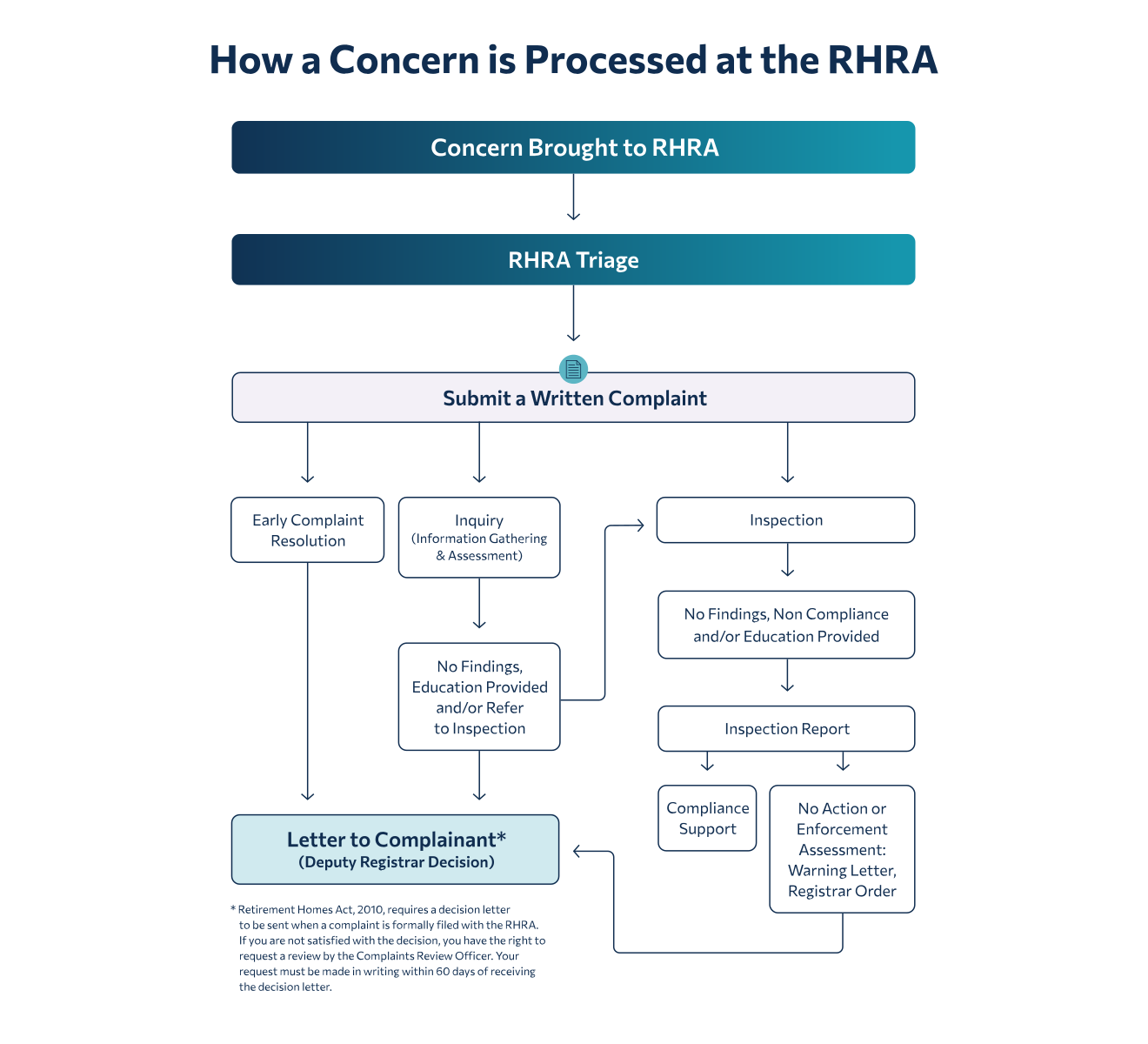
The sections below explain each step of the process in more detail. For information about response times and service standards, see Timelines and Service Standards.
An inquiry helps us better understand the concern.
This may include reviewing records and documents, requesting additional information and speaking with those involved.
Following an inquiry, we may:
- determine that the home met legislative requirements and close the matter
- provide education to support the home’s compliance and protect resident safety
- determine that further review is required
If further review is required, we may conduct an inspection.
An inspection may be conducted when there are concerns about safety, potential non-compliance with legislative requirements, or where further review is required after an inquiry.
Following an inspection, we may:
- determine that the home met legislative requirements and close the matter
- identify situations where the home did not meet legislative requirements
- provide education to support the home’s compliance and protect resident safety
- require corrective action to address the issues identified
- determine whether enforcement action, such as a warning or Registrar’s Order, is required
Where possible, we will let the person who submitted the report know about the outcome of our review.
If the report was submitted anonymously, we may not be able to provide updates or share the outcome.